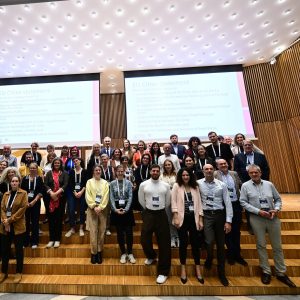
From April 14th to 16th, 2025, the MUFPP Secretariat welcomed in Milan delegations from the Indonesian cities of Bandung, Denpasar, and Semarang, along with representatives from the Indonesian Government, the Italian Ministry of Foreign Affairs and International Cooperation, the ASEAN Secretariat and the Health Ministry of Malaysia.
The presence of ASEAN and Malaysian institutions alongside the Indonesian cities and government reflects the broader regional commitment to improving child nutrition. Since 2017, ASEAN leaders have committed to eliminating all forms of malnutrition, adopting a strategic framework and action plan to guide concrete initiatives.
Indonesia is leading the development of minimum standards for the “ASEAN Nutrition School Package”, aimed at ensuring access to healthy and nutritious food for all children across the region. To complement this effort, Malaysia is leading the creation of a “Framework of Central Kitchens for Childcare Centres and Kindergartens in ASEAN”, which has already been drafted and will benefit from the insights shared during this exchange in Milan.
The Indonesian study visit in Milan took place within the framework of the broader project Spreading Experiences and Knowledge on School Meals Programmes in ASEAN Cities, aimed at strengthening the capacities of city officials in designing effective school meals programmes. The visit followed a successful study visit in March 2025 by the cities of Chiang Mai and Bangkok (Thailand) and Hoi An (Vietnam).
The visit was promoted by the Municipality of Milan – MUFPP, together with ASEAN, as part of the Cities Feeding the Future Initiative, and funded by the Italian Ministry of Foreign Affairs and International Cooperation.
A Comprehensive Study Visit in Milan
Over the course of three days, the Indonesian delegation took part in a rich program of activities designed to explore the key components of Milan’s school canteen system. Through presentations, technical workshops, and site visits, the exchange provided a platform for sharing best practices that could inform the development of similar programmes in Indonesia.
The visit was officially opened at Palazzo Marino, the seat of the Municipality of Milan, with welcoming remarks and the national anthems of Italy and Indonesia.
Anna Scavuzzo, Vice Mayor of Milan in charge of the city’s food policy, highlighted the significance of the partnership: “Milan and the MUFPP are honored to support Indonesia’s ambitious national school meal program, which aims to provide free and nutritious meals to 80 million students by the end of 2025. We are proud of the progress made so far and are already working on a follow-up project aimed at continuing support for ASEAN cities with the help of our Ministry of Foreign Affairs.”
Valentina Muiesan, Head of Division for South East Asia, Pacific, Regional Organizations, and Antarctica at the Italian Ministry of Foreign Affairs and International Cooperation, described the MUFPP-ASEAN project as: “A cutting-edge food security initiative focused on school feeding, as demonstrated by the participation of 30 cities across eight ASEAN countries.”
Highlights of the Visit
The study visit featured key study visits and workshops, including:
- Visit to Milano Ristorazione’s “Giusti” School Kitchen Center: A tour of a kitchen and its dining area within a school setting, highlighting the process of on-site meal preparation
- Visit to Milano Ristorazione’s Central Kitchen “Quaranta”: Insight into large-scale meal preparation
- Visit to Local Urban Farm Suppliers: Delegates toured Battivacco (rice) and Campazzo (dairy) farms, two urban suppliers contributing to the school meal programe, demonstrating how such programmes can strengthen local supply chains and promote urban agriculture.
- Workshop at the Food Policy Department Headquarters: Technical sessions on the development of feasibility studies for central kitchens in the three visiting Indonesian cities, in collaboration with Milano Ristorazione and the Milan food policy team.
Looking Ahead: Next Steps and Commitments
The study visit concluded with a wrap-up session that focused on the next steps for future collaborations between Milan and the Indonesian cities, along with a series of commitments made by government and ASEAN delegates.
The delegation expressed strong enthusiasm for the visit and a clear determination to apply the lessons learned in Milan to their local contexts.
“On behalf of the Indonesian delegation, we would like to express our deepest gratitude for this wonderful experience over the past three days—for the warm welcome and hospitality, and for the valuable insights gained. We learned a lot from Milan’s school meals program and are truly inspired to replicate it in our country,” shared Gin Gin Ginanjar, Head of the Agriculture and Food Security Department, City of Bandung.
Following the finalization of the feasibility studies for the development of central kitchens in Bandung, Denpasar, and Semarang, the MUFPP’s focus will shift to unlocking funding opportunities for their implementation.
Another key step for future collaboration will be the National Dialogue in Semarang (Spring 2026), which aims to bridge the gap and strengthen cooperation between national and local governments, ensuring the successful implementation of the national “Nutritious School Meals programme”.
The upcoming MUFPP Global Forum will provide an excellent opportunity to showcase Indonesia’s efforts on school meals programme. Another global platform for reporting will be the Global Summit of the School Meals Coalition in Brazil (September 2025).
Regarding the expansion of exchange activities, Jim Catampongan, Senior Officer of the Health Division at the ASEAN Secretariat, stated: “We look forward to deepening and expanding our partnerships with more member states and cities.” This may include organizing similar study visits for other ASEAN Member States. Moreover, ASEAN is considering extending its collaboration with MUFPP into a phase 2 of the project, with a focus on unlocking funding opportunities to implement school meals projects developed in collaboration with MUFPP.
With these concrete commitments and continued support from all involved parties, the project “Spreading Experiences and Knowledge on School Meals Programmes in ASEAN Cities”, is well-positioned to grow and extend the benefits of school meals programmes globally, creating a replicable model that promotes food security and nutrition in schools across Asia and beyond.