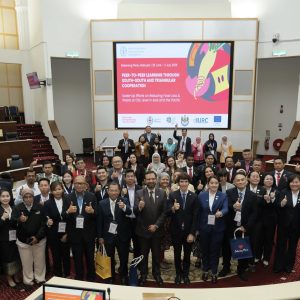
On the 29th and 30th of April 2025 the city of Granollers hosted the first Symposium on Cultivated Biodiversity which was organised by the Research Institute of Organic Agriculture (FIBL) and Red de Municipios por la Agroecologia (RMA).
For Cultivated Biodiversity, we mean the diversity in species and variety of plant crops cultivated for human consumption which finds its genesis from seeds of a vast diversity of landraces, heirloom varieties, and locally adapted cultivars.
Cultivated biodiversity plays a critical role in food sovereignty and system resilience and, for this reason, is the first building block of our food chain. Specifically, to ensure resilience of European agriculture, we need seeds better adapted to changing conditions. Organic and agroecology-oriented farming systems starting from locally adapted seeds, ensure this.
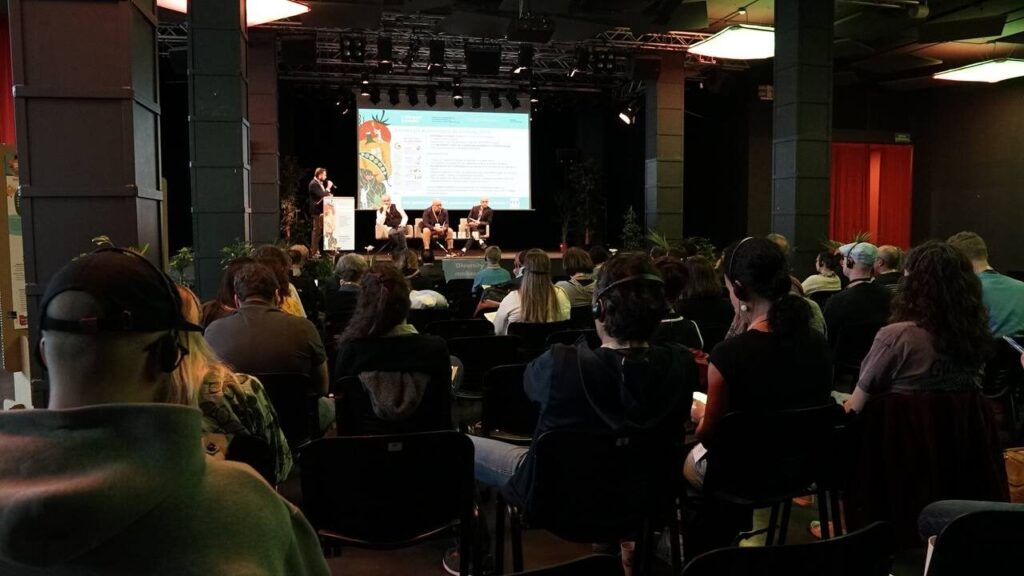
The symposium developed over two days with interventions of politicians, technical officers and breeders as well as public officers from cities. Interventions were made by NGOS such as the World Farmers Markets Coalition as well as by public entities such as the province of Barcelona, the cities of Scandicci, Granollers, Cork, Lyon and Orduña which introduced their work on the topic: ranging from seed banks to community gardens, from organic and local public procurement to public seed breeding farms as well as the institutionalization of agrarian parks to avoid urban sprawl.
Participants worked and gave feedback on the Granollers Manifesto, which was developed around the MUFPP framework, and represents a point of reference for signatory cities and beyond interested in agroecology. The manifesto outlines a roadmap toward a shared vision: that by 2050, all European municipalities will have adopted food policies that promote the production of sustainable and healthy food within planetary boundaries, while also supporting the economic viability of their communities and residents.
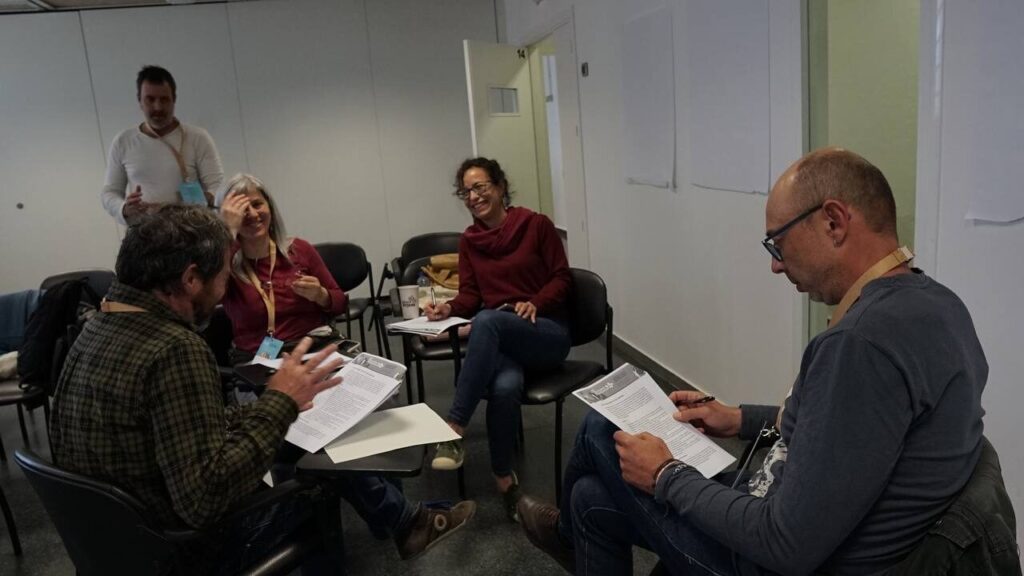
It is worth to notice that local and bottom up breeding processes support the development of locally adapted seeds which are more resistant to context-specific conditions and, furthermore, have a cultural value. Veronique Chable, Senior scientist at the Institut national de la recherche agronomique (INRAE) and Grietje Raaphorst-Travaille, dutch organic breeder and seed producer, highlighted that global seed companies, based on the use of chemicals, follow marketing-driven strategies: fewer varieties, more patents, less diversity. By being patent free and without the necessity of chemicals, regional breeding benefits soil, farmers, animals and the future of seed and, henceforth, of our food system.
In the closing session, Francesco Cagnola, representing the MUFPP, appealed partners and signatory cities to participate in the Milan Pact Awards call for application with such a topic. In this way, the communal work could be leveraged and brought to the attention of regional and international institutions for further developments.

Furthermore, the MUFPP highlighted the need to give more credit to urban and peri-urban agriculture: European cities should look at it beyond entertainment but consider it in terms of the percentage these activities can contribute local food autonomy. In this regard, the case of Lyon is particularly interesting as the metropolitan city aims to achieve 15% of autonomy in its food consumption through local food production, which is a very ambitious and avant-garde objective for a big European city.