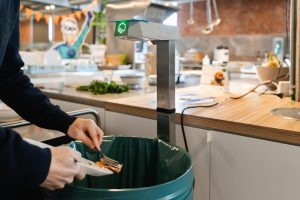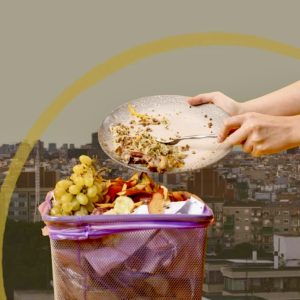
Our journey to explore the cities awarded in the latest edition of the Milan Pact Awards 2025 continues. After highlighting the Special Mentions in the Governance, Sustainable Diets and Nutrition, Social and Economic Equity and Food Production categories, we now turn our attention to the initiatives recognised in the Food Waste category, developed by the cities of Bandung, Barcelona, Bogotá and Columbus.
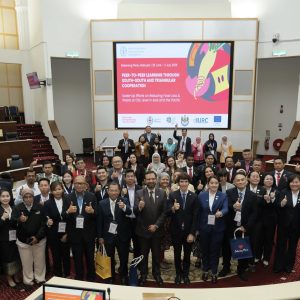
During the Milan Pact Awards Ceremony, Divine Njie, Deputy Director of Agrifood Systems and Food Safety at FAO, highlighted the key trends emerging from the practices collected in this category. In 2025, cities demonstrated a clear shift in food waste strategies, moving beyond recovery to develop circular systems that combine prevention, redistribution, recycling, and social inclusion. The practices show how food waste reduction is increasingly linked to climate action, local food economy redesign, and active citizen engagement.
Let’s now take a closer look at the practices awarded with Special Mentions in the Food Waste category.
Bandung – Circular Economy of Buruan SAE


Bandung is facing the challenge of its growing volume of waste—1,594 tons per day, nearly half organic—by integrating maggot cultivation. This practice has been incorporated into Buruan SAE, an integrated urban farming program that transforms yards and urban spaces into small-scale, healthy, natural, and cost-effective productive systems, with a strong focus on food security, sustainability, and community engagement.
The city established maggot facilities in 51 sites, encouraging community groups to use maggots as animal feed across 149 maggot hangars. The initiative is promoted by the Food and Agriculture Service in collaboration with the Environmental Service and is fully supported by the Mayor of Bandung.
Through maggot farming, the city processes and reduces 450 tons of organic waste per month, producing 31 tonnes of fresh maggots for the market, with an estimated value of €8,420.40 per month.
The practice treats organic waste as a resource for producing high-protein feed and valuable fertiliser. The integration of maggot hangars within the Buruan SAE network enables a circular system in which waste from one process becomes an input for another.
The initiative’s broader impact lies in community empowerment, environmental sustainability, and multi-stakeholder collaboration. Environmentally, it reduces landfill waste, lowers emissions, and produces natural fertiliser.
Read the full practice — Bandung Circular Economy of Buruan SAE
Barcelona – FOODBACK


Foodback is a key component of Mercabarna’s system for managing surplus and organic plant waste. Its purpose is to recover fruit and vegetables that are not marketable but still safe for consumption, preventing them from becoming waste. After a food-safety assessment and sorting process, the products are either distributed to social organisations or processed for further use.
Originating from the evolution of the long-standing collaboration between Mercabarna and the Food Bank, Foodback improves efficiency, ensures food safety, and makes participation compulsory for wholesalers. The project is innovative in its co-design, co-management, its integration into waste-prevention systems, and the logistical and financial support it provides to companies. It is further strengthened by collaboration across public, private, social, and academic sectors.
In 2024, the initiative recovered 838 tons of products for social purposes, supporting 300+ social entities and community kitchens. It reduced over 1 million kilograms of CO₂ equivalent and saved nearly 4.7 million cubic metres of water. The recovered food had an estimated value of €186,138 and improved access to nutritious food for vulnerable communities.
Foodback’s inclusive governance model involves a wide network of actors — Mercabarna general coordination and wholesalers, social organisation/NGOs, the Barcelona Food Bank Foundation, and governmental bodies (municipal and regional government), private foundations and training and work foundations — working together to reduce food waste and strengthen social support systems.
Read the full practice: Barcelona — FOODBACK
BOGOTÁ – Bogotá FLW Reduction Week


The Bogotá Food Loss and Waste (FLW) Reduction Week is an annual, multi-sector initiative organised since 2020 by the Secretariat of Economic Development of the Bogotá Mayor’s Office. Its objective is to raise awareness of the social, economic, and environmental impacts of food loss and waste across the entire food supply chain, from producers to consumers, while encouraging a cultural shift towards more responsible and sustainable consumption.
The initiative aligns with Sustainable Development Goals 2 and 12 and with national food waste legislation, making it a replicable model both in Colombia and internationally.
Between 2020 and 2024, across its 5 editions, FLW Reduction Week organised 180+ activities that reached more than 800,000 citizens. Supported by over 40 local, national, and international partners, it has become Colombia’s leading urban event focused on preventing food loss and waste.
The initiative is innovative in its decentralised model, with a central annual theme delivered through a main agenda, complemented by parallel agendas developed by participating higher education institutions—engaging students, teachers, and researchers in practical solutions.
A standout outcome of the 2020 #SinDesperdicios Hackathon was the creation of EatCloud, a social enterprise that has since saved more than 43,118 tons of food and avoided 105,025 tons of CO₂ emissions, demonstrating FLW Reduction Week’s ability to foster scalable, concrete solutions for food loss and waste.
Read the full practice — Bogotà FLW Reduction Week
Columbus – City of Columbus Food Waste Reduction Strategy


In Columbus, Ohio, over a million pounds of food are landfilled in Central Ohio, even as nearly 11% of residents face hunger. To address food waste and food insecurity simultaneously, the city has pursued ambitious, community-driven action, guided by its Climate Action Plan goal of carbon neutrality and the Local Food Action Plan’s focus on waste prevention.
Through a partnership with NRDC’s Food Matters programme, Columbus updated its refuse code to support residential composting, engaged 300+ community gardens, and expanded food rescue operations. The city piloted food rescue at events, launched free Food Scraps Drop-Off sites, and opened new Waste and Reuse Convenience Centres. A citywide education campaign engages students, residents, and businesses in reducing wasted food
The impact of Columbus’s food reduction strategy is measurable. As of early 2025, more than 185,000 pounds of food scraps have been composted, while food rescue operations diverted over $540,000 worth of edible food from landfills. With 100+ donor sites and 80+ receiving agencies, the initiative strengthens social services and supports vulnerable communities, including organisations that rely primarily on rescued food for their programmes. In 2024, environmental benefits included savings of over 103 million gallons of water.
The innovation of this practice lies in Columbus’s ability to break traditional silos—uniting Public Service, Public Health, Sustainable Columbus, and other departments to embed food waste reduction into everyday operations. Columbus demonstrates how integrated food waste strategies can directly mitigate climate impacts, strengthen food security for vulnerable populations, and generate significant cost savings for community organizations.
Read the full practice — City of Columbus Food Waste Reduction Strategy
Special thanks to Rayen Victoria Ferreira Molina, MUFPP Intern, for writing this article.