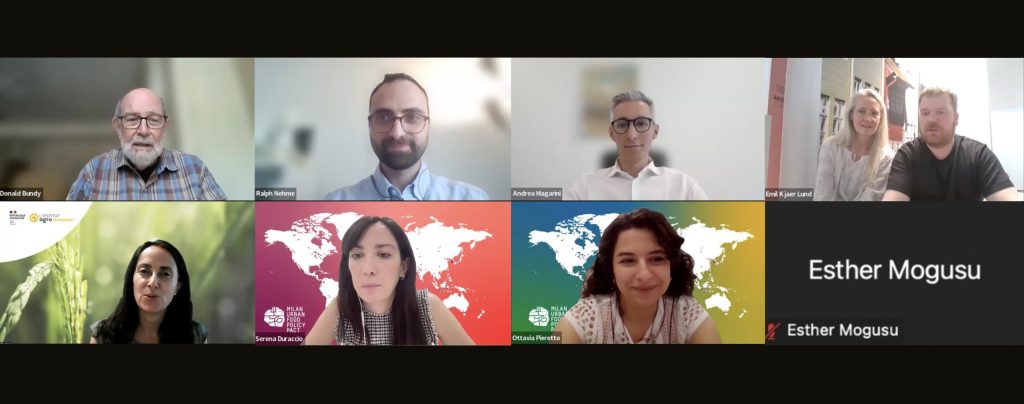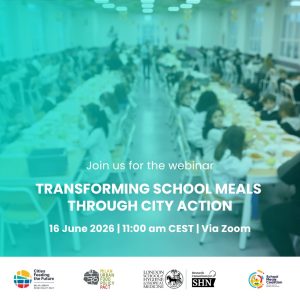
More than 150 participants from cities, research institutions, and international organisations around the world attended the webinar “Transforming School Meals Through City Action” on 16 June 2026. The event marked the launch of a new collaboration between two initiatives of the School Meals Coalition: the Research Consortium for School Health and Nutrition (led by The London School of Hygiene & Tropical Medicine) and the Cities Feeding the Future Initiative (led by the Milan Urban Food Policy Pact).
In his welcoming remarks, Professor Donald Bundy, Director of the Research Consortium for School Health and Nutrition, highlighted how the webinar presented the first two city-level case studies developed through this meaningful collaboration, focusing on the experiences of Milan and Montpellier. These two cities were not selected by chance: both are “Champion Mayors” of the Cities Feeding the Future Initiative—that is, city leaders from the MUFPP in School Meals Coalition member countries who lead pioneering school meal programmes and inspire similar policies in other cities.
Established in 2021 in response to the global disruption caused by COVID-19 and school closures, the School Meals Coalition is a global network of governments working together to strengthen school meals worldwide, bringing together more than 110 countries and over 150 partners.
How Two School Meals Coalition Initiatives Came Together
Presenting the work of the Research Consortium, Sylvia Avallone (Chair of the CoP Good Examples of the Research Consortium for School Health and Nutrition), highlighted the importance of documenting and analysing school meal programmes around the world and the progress made over the last five years.
The Research Consortium for School Health and Nutrition has been working with 57 countries and has developed a collection of 35 national case studies examining how school meal programmes are designed and implemented. These studies explore governance models, nutritional standards, links with local food systems, costs, monitoring mechanisms, challenges, and lessons learned.
The aim of these case studies is to identify practical solutions and successful approaches that can support governments in strengthening their programmes. By applying a “Science of Solutions” approach, researchers have analysed recurring practices across countries to identify common success factors and build a stronger evidence base for policy action.
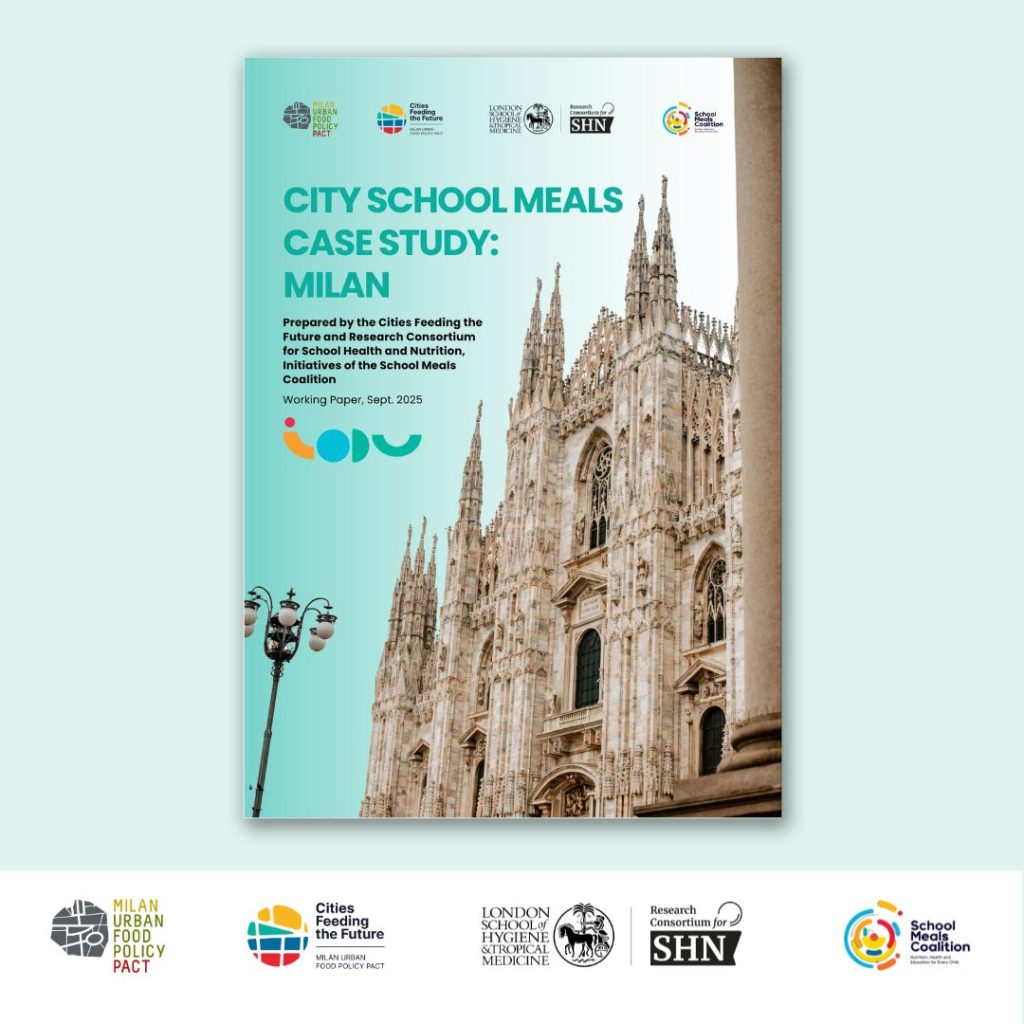
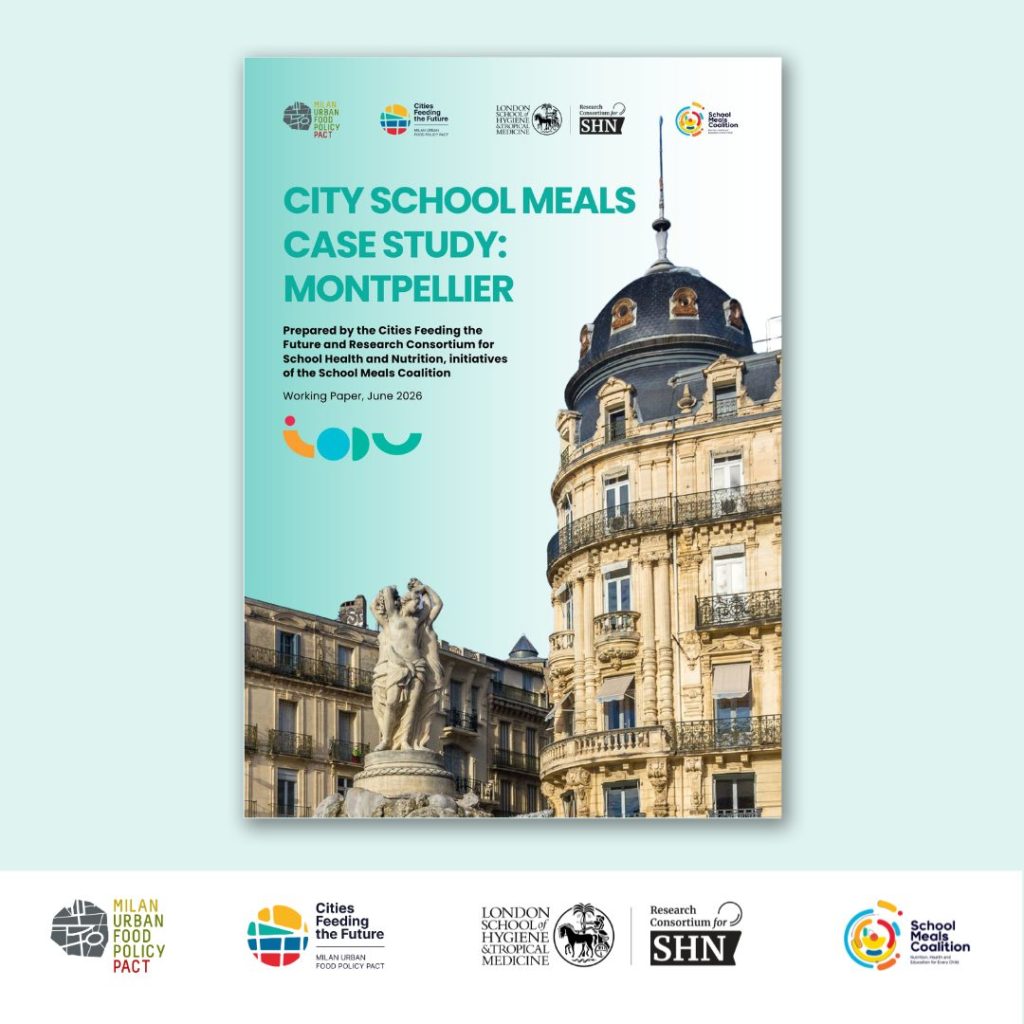
This methodology has now been adapted to the city level, with Milan as the first case study developed through this collaboration and Montpellier as the second, launched alongside this webinar.
Serena Duraccio, Officer of the MUFPP Secretariat, introduced the background and objectives of the Cities Feeding the Future Initiative. Launched in 2023 under the leadership of the MUFPP, the initiative aims to strengthen the role of cities in developing effective school meal programmes and bridging the gap between local and national levels of governance. The initiative’s work is structured around three pillars: advocacy, best practices, and research.
Within the research pillar, expanding the focus from national case studies to city-level experiences represented a natural evolution of the initiative’s work. The aim is to engage political leaders from the MUFPP community — particularly Champion Mayors of the Cities Feeding the Future Initiative — who have developed outstanding school meal systems and can serve as pioneers and inspire other cities around the world.
Milan and Montpellier: two cities, two approaches to transformation
Presenting the Milan case study, Andrea Magarini, Director of the Food Policy Area of the Municipality of Milan, illustrated how the city has developed one of the most comprehensive and long-standing school meal programmes in Europe.
Serving approximately 77,000 meals every day across more than 400 public schools, Milan’s school food system is rooted in a tradition dating back more than 125 years. Today, school meals are considered not only an essential public service, but also a strategic lever to advance broader food policy objectives.
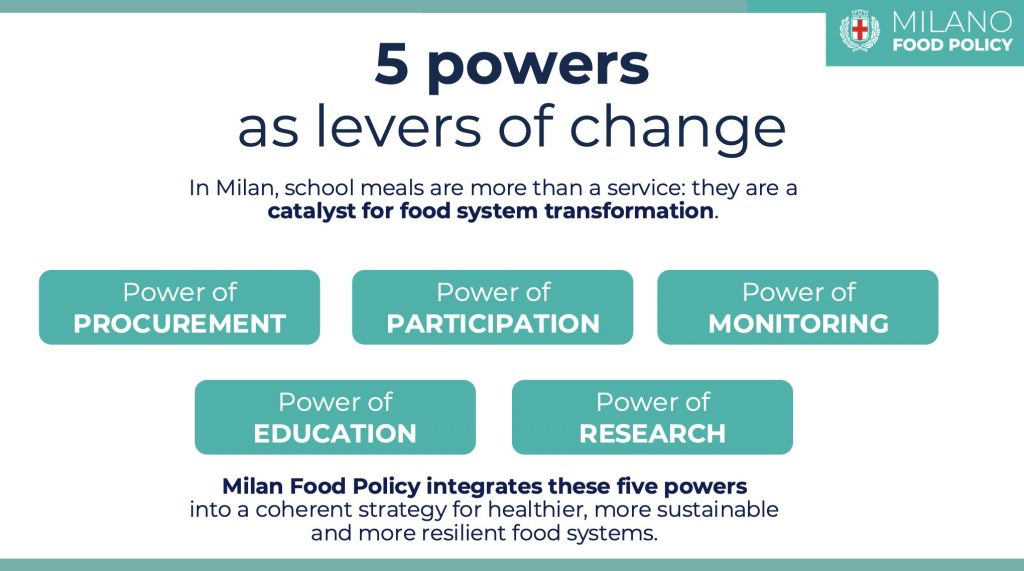
The programme integrates several dimensions, including sustainable procurement, participation, monitoring, education, and research. Through its purchasing power, the city promotes sustainable and local supply chains, while progressively increasing plant-based options and reducing the environmental impact of meals. A strong participatory approach is ensured through school meal commissions involving parents, teachers and community representatives, who contribute to monitoring and improving the service. The programme is also supported by extensive data collection, including food waste monitoring and satisfaction surveys. Through collaborations with schools, universities and European research projects, Milan has become a living laboratory demonstrating how school meals can simultaneously contribute to health, environmental sustainability and social inclusion.
Following the presentation on Milan’s experience, Ralph Nehme, Postdoctoral Researcher at Institut Agro Montpellier, presented the case of Montpellier, highlighting how the city has transformed its school meal system into a broader food policy instrument.
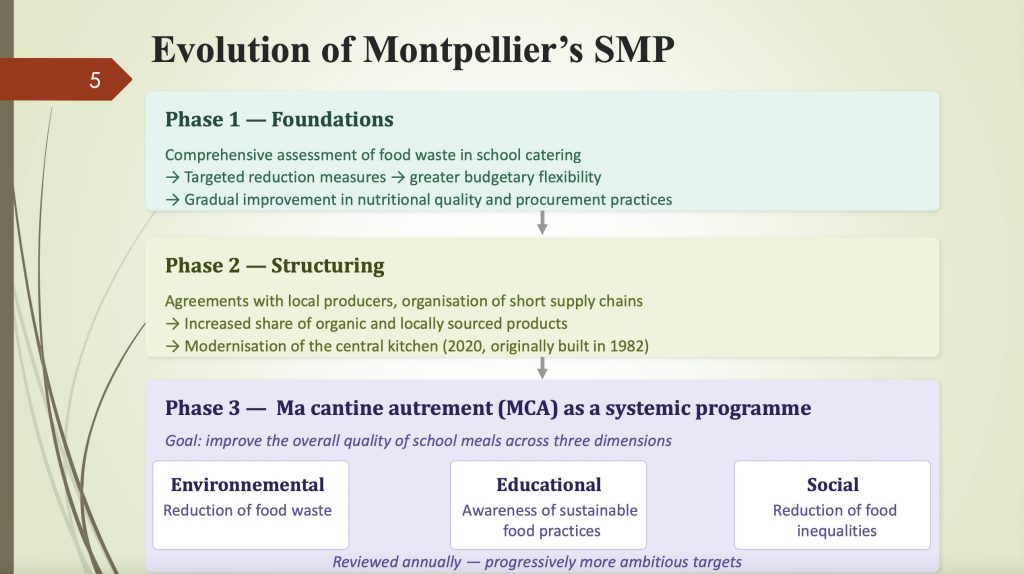
The city provides meals to around 25,000 primary school children and has progressively developed a model focused on food waste reduction, stronger connections with local producers, and the modernisation of its central kitchen.
Through the programme “Ma Cantine Autrement” (“My Canteen Differently”), Montpellier has set ambitious objectives, including reaching 100% organic or locally sourced products by 2026. Meals are designed seasonally, prioritising fresh and homemade food while reducing ultra-processed products.
The city also promotes dietary diversity through flexitarian, vegetarian and plant-based options, including regular fully vegetarian meals days. Beyond nutrition, the programme integrates food education, community engagement, and sustainable procurement into everyday school life.
The experience also highlights the challenges of transforming school food systems, including sustainable public procurement, coordination with producers and maintaining quality while ensuring accessibility.
Lessons from Copenhagen and Nairobi: procurement, innovation and inclusion
During the Q&A session, participants exchanged experiences from other cities, with representatives from Copenhagen and Nairobi taking the floor to share their perspectives.
Betina Bergmann Madsen, UN Food Systems Champion, Head of Procurement and Team Leader for Strategic Procurement and Food at the City of Copenhagen, highlighted the strategic role of public procurement as a driver for sustainable food systems.
She presented Copenhagen’s innovative approach to school food procurement, including a new coffee tender introducing criteria related to climate impact, fair trade, quality and access for small producers. The experience demonstrated how public purchasing can go beyond price-based decisions and actively influence markets towards sustainability. Educational activities with children complement this approach by increasing awareness of food systems and sustainability.
Esther Mogusu, Director of Nutrition, Wellness, and School Feeding of the City of Nairobi, presented the city’s universal school feeding programme, launched in 2023, which currently reaches more than 340,000 learners from kindergarten to junior secondary school, with 98% coverage of public schools. The programme was developed to address food insecurity and school absenteeism, particularly in a context where around 60% of Nairobi’s population lives in informal settlements.
Nairobi’s model is based on a centralised kitchen system, enabling economies of scale, efficient logistics and digital management tools, including electronic wristbands for students and monitoring dashboards. The city also highlighted its political commitment and engagement in global initiatives, including the Milan Urban Food Policy Pact and the Cities Feeding the Future.
The two cities expressed interest in documenting their experiences through a dedicated case study to share lessons learned and inspire other cities.
Building a global learning network on school meals
The webinar concluded by highlighting how school meal programmes take different forms across cities while addressing shared challenges related to health, sustainability, equity and food systems transformation.
The case studies developed through the collaboration between the Research Consortium for School Health and Nutrition and Cities Feeding the Future represent a valuable tool to map city experiences, showcase good practices and strengthen peer-to-peer learning.
The discussion reinforced the importance of collaboration among local authorities, researchers, international organisations and actors across the food supply chain, as well as the need to connect scientific evidence with public policy.
School meals were recognised as a powerful cross-sectoral solution capable of adressing multiple food system challenges. Future activities will continue to expand this learning network through new case studies and shared resources, supporting cities around the world in designing more sustainable, inclusive and resilient school meal systems.