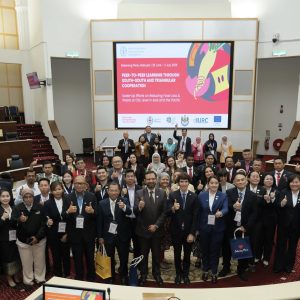
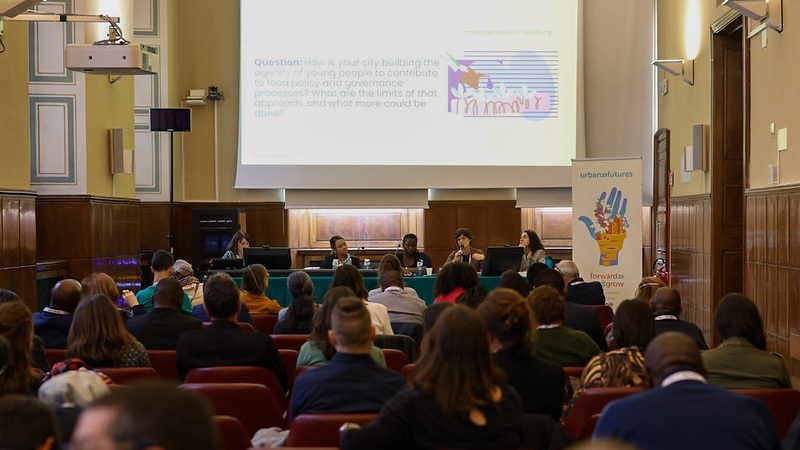
The session Building youth agency for just and resilient urban food systems, organised as part of the MUFPP Global Forum 2025 (16 October, University of Milan) focused on the essential role of young people in shaping fair, inclusive, and climate-resilient urban food systems.
It brought together experts and city representatives from Milan, Medellin, and Mbale, alongside representatives from partners who co-organised the session: Rikolto, Hivos, ActionAidItaly, and RUAF.
The objective of the event was to demonstrate how youth agency—the ability of young people to make choices and take action—can drive transformation in urban food governance and food system resilience.
Charlotte Flechet (Rikolto), the host of the session, opened the discussion by emphasizing that “Today’s generation of young people is the largest in history, and we simply cannot transform food systems without them in the driver’s seat.” She highlighted how young people are already bringing renewal to the agri-food sector, while also stressing their right to decent jobs, dignified livelihoods, and long, healthy lives.
Organisational perspectives
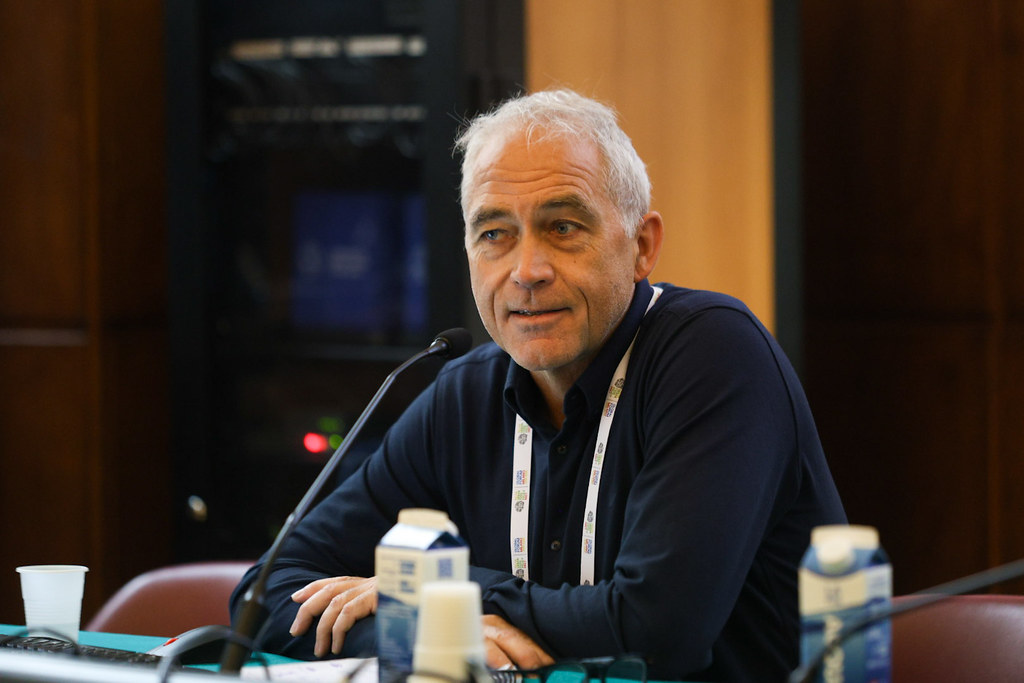
The session then featured contributions from the co-hosting organizations, each presenting complementary approaches to advancing youth empowerment.
ActionAid Italy, represented by Roberto Sensi, shared results from the report “The Invisible Distress of Having No Choice”, developed with the University of Milan. The study examined adolescent food poverty in Milan, Naples, and Rome, revealing it as a multidimensional issue shaped by lack of access, stigma, and loss of autonomy. Based on a national survey of 2,200 adolescents, the research showed that young people see food poverty as a shared social responsibility requiring structural policy responses — such as universal school meals and youth participation in local decision-making — rather than charity alone. The research underscored the need to move from food aid to building youth agency and capacity.
René van Veenhuizen (HIVOS) introduced the Urban Futures programme, which supports youth-led climate and food initiatives in ten intermediary cities across Africa, Latin America, and Asia. Through participatory governance, climate-resilient practices, and increased financing for sustainable food systems, the project strengthens local youth leadership. Videos from Medellín and Kitwe showcased how young “Urban Futures Champions” are pioneering food innovations in their communities.
From Southern Africa, Runyararo Chibota shared experiences from Zimbabwe and Zambia, highlighting projects like the Youth Food Action Project and Food Change Labs. These initiatives use participatory research, policy dialogues, and innovation hubs to enable young people to design solutions (such as hydroponic farms), and engage city councils in promoting healthy, accessible food. The approach combines policy advocacy, leadership training, and access to green finance to ensure youth inclusion in governance processes.
Cities Taking Action
In the second part of the session, city representatives demonstrated how municipalities are operationalising youth participation.
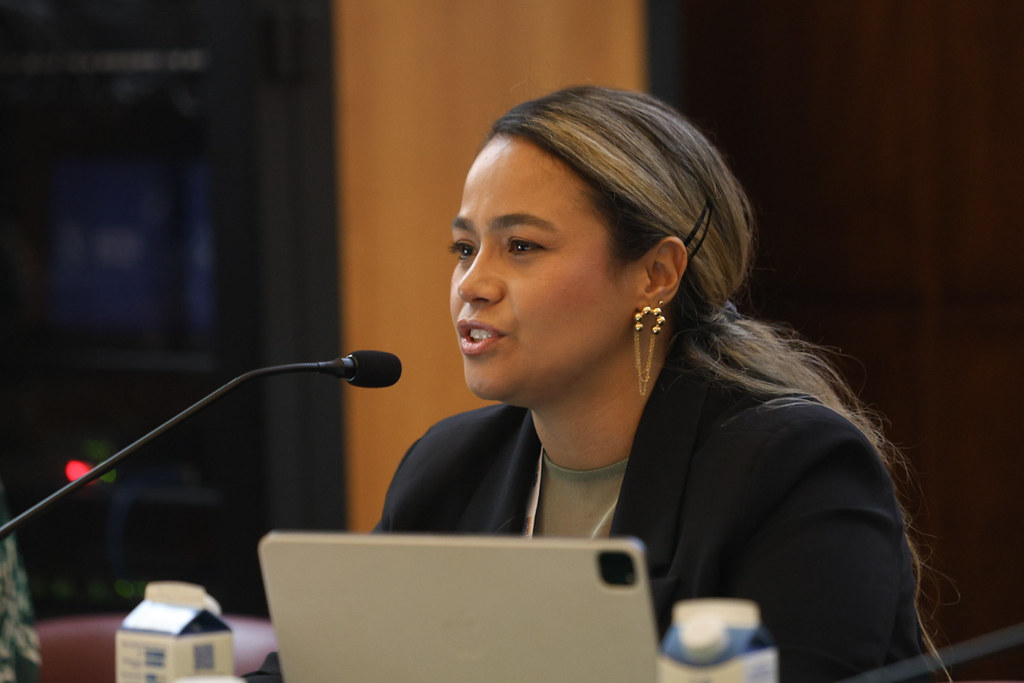
Natalia Cardona (Medellín) described the Zero Hunger platform and participatory school feeding programmes that engage young people in decision-making.
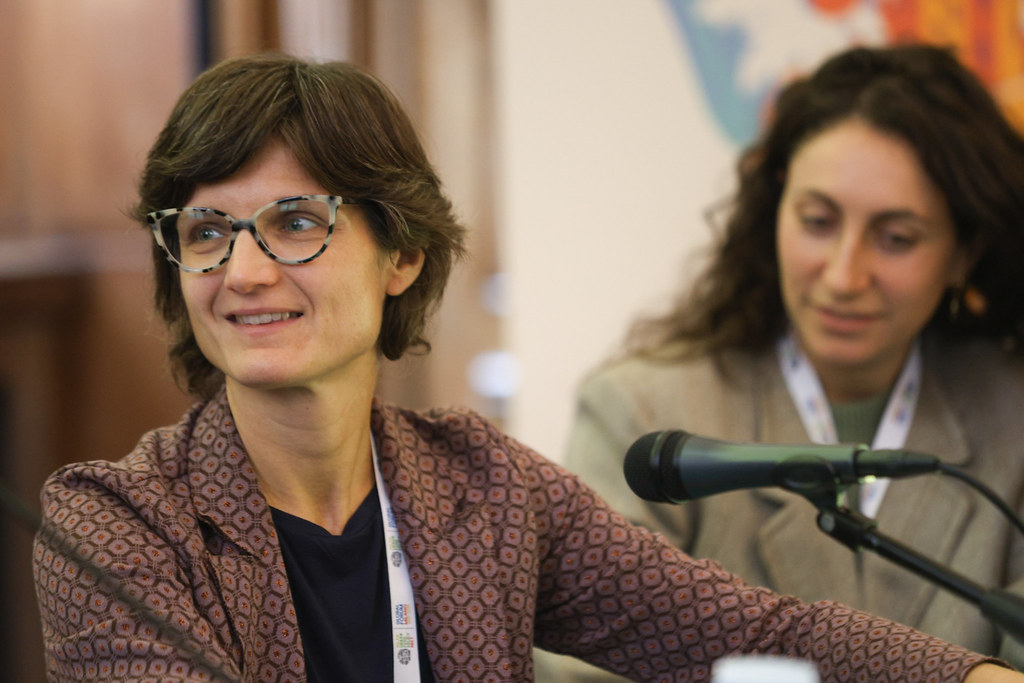
Cristina Sossan (Milan) reflected on new efforts — including Feed Your Future, Food Wave and the YEAH –Youth Engagement Action Hub — designed to close the communication gap between policymakers and young citizens.
Halima Namubiru (Mbale) shared the experience of integrating youth into food parliaments and local production programmes, offering training, flexible funding, and peer learning opportunities. Thirty percent of participants in local development initiatives are young people, supported to launch small enterprises and engage in community leadership.
Youth voices and dialogue
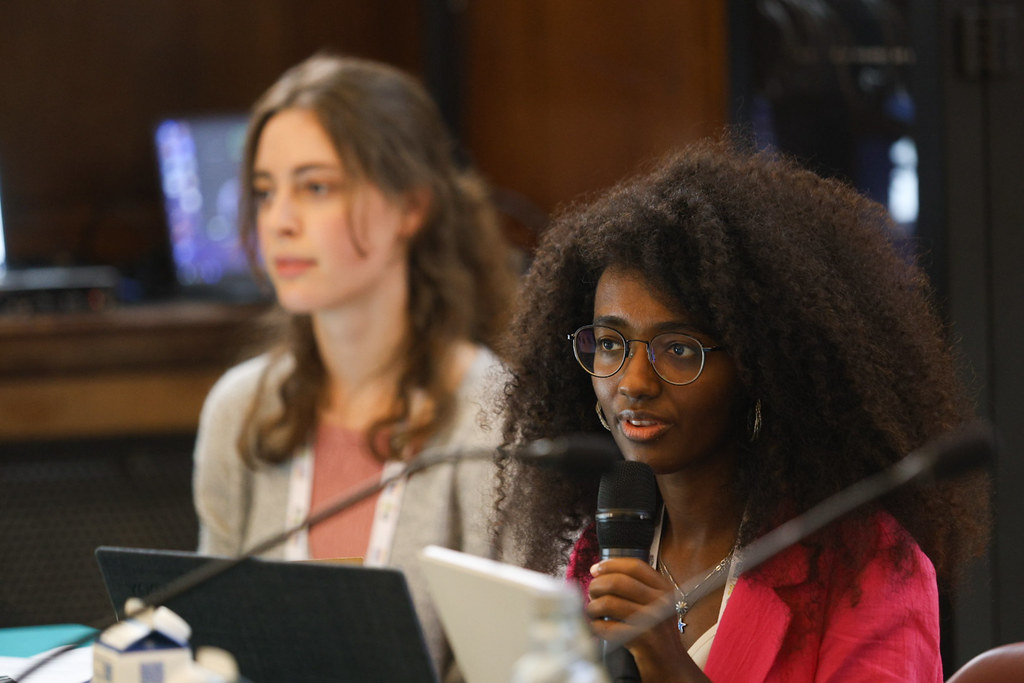
The session continued with a youth-led fireside chat moderated by RUAF, featuring video messages from AfriFoodLinks youth ambassadors and live interventions from young participants.
Tegitu Casiraghi, AfriFoodLinks Youth Ambassador for Milan, shared her experience bridging African and European food narratives and explored how individual young people can access city-led initiatives. Other youth voices highlighted the challenge of balancing participation with livelihoods, education, and care responsibilities.
Conclusion
Across diverse urban contexts, the session converged on a shared message: young people are not peripheral actors in food systems, but essential drivers of urban food resilience. Their agency begins with access to land, finance, knowledge, and decision-making spaces, and grows when cities invest in structured and well-resourced participation.
Closing the session, Jess Halliday (RUAF) issued a clear challenge: “Next time you come to the Milan Pact, bring someone under 30 from your team.” Representation, she argued, is the first step toward building capacity across generations and ensuring that youth are present wherever food system decisions are shaped.
Across continents, one message echoed clearly: youth are not the future of food systems — they are transforming them now.
Special thanks to Gaia Donghi, MUFPP Intern from the University of Milan, for writing this article.