The global food system is a major driver of greenhouse gas emissions, accounting for roughly 30% of total global emissions from production to consumption, including packaging, transport, and waste. By integrating food policies into their climate agendas, cities can combat climate change. This approach is not only about reducing emissions, but about transforming how communities produce, distribute, and consume food—linking environmental action with equity, health and sustainable urban development.
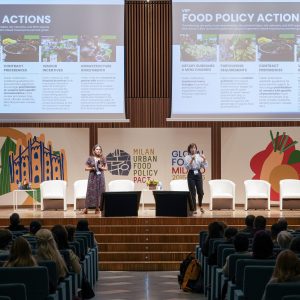
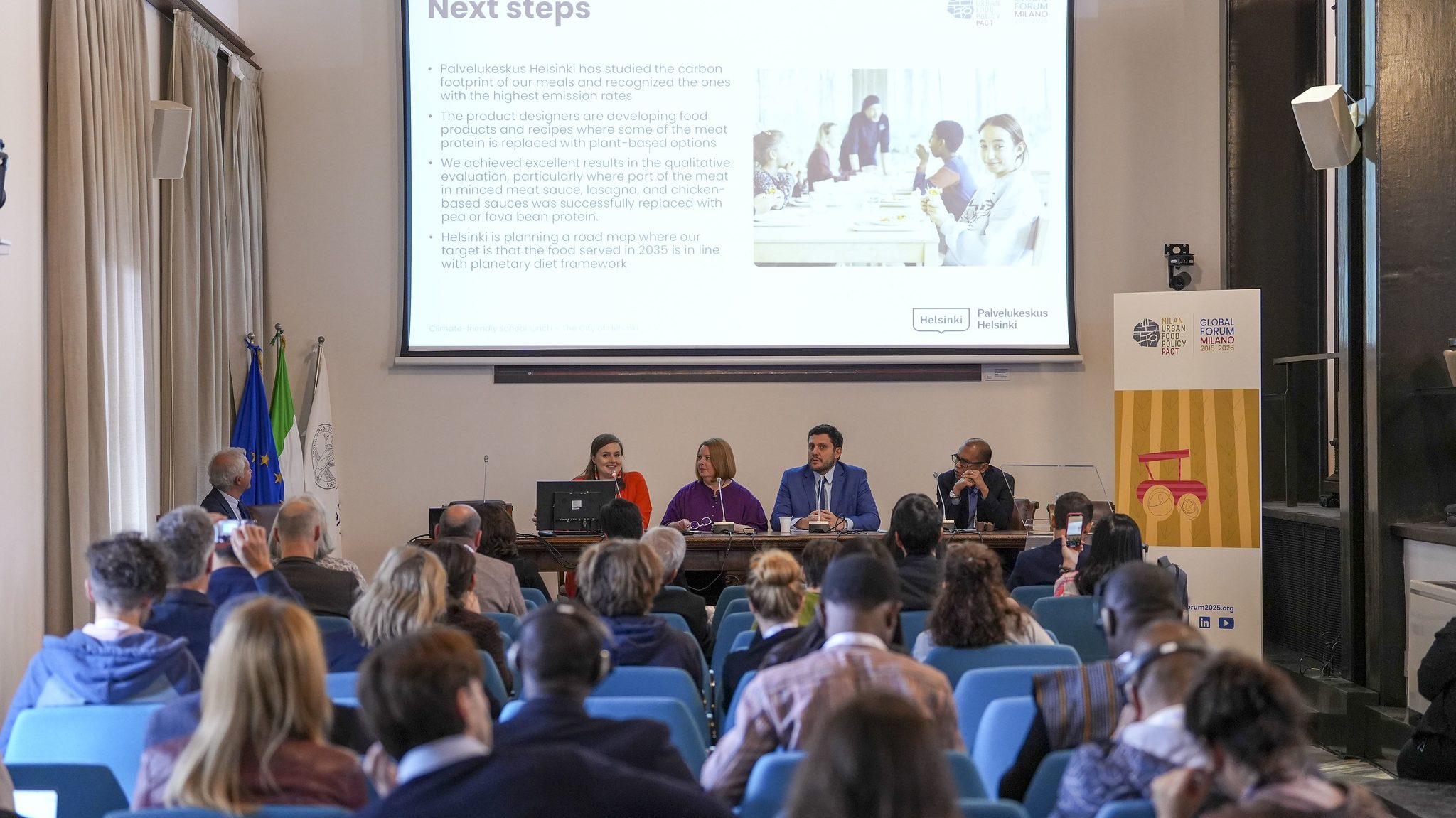
This perspective framed the session Food Policies and the Climate Agenda: City Experiences and Urban/National Collaborative Policies, held during the MUFPP Global Forum 2025 (on October 16, 2025, at the University of Milan). The session explored how food and climate agendas can be aligned not only from a technical and scientific standpoint, but also through governance structures and institutional coordination between cities and national governments.
The event was jointly organized by the Carbon Neutral Cities Alliance (CNCA) and Economia e Sostenibilità (ESTÀ), in collaboration with the Government of Brazil, namely the National Secretariat for Food and Nutritional Security of the Ministry of Development and Social Assistance, Family and Fight Against Hunger (Brazil).
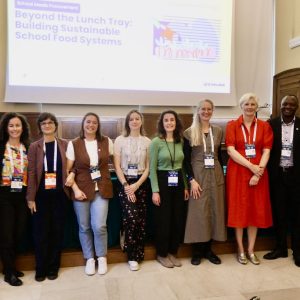
It brought together representatives from Helsinki (Finland), Minneapolis (United States), Osasco (Brazil), and Seberang Perai (Malaysia) to share concrete approaches for building sustainable, equitable, and climate-resilient urban food systems.
Discussions highlighted how local governments—where many food-related emissions and impacts materialize, particularly in transport, consumption, and waste—are uniquely positioned to translate global climate goals into tangible local action.
Helsinki’s Climate-Friendly School Lunch Initiative
Meri Mathlin of the City of Helsinki, Finland, outlined Helsinki’s Climate-Friendly School Lunch Initiative, which places sustainable public food at the center of the city’s climate strategy. The city has made a public commitment that by 2035 all food served through public catering will follow the planetary diet—emphasizing plant-based meals and reduced meat and dairy consumption.
This ambition is embedded in Helsinki’s recently adopted Food Policy Strategy, which sets an emissions reduction target of 85% by 2030 and aims for net-zero emissions by 2040, with public food procurement identified as a key leverage point for reducing climate impacts.
Helsinki’s centralized food service system enables the city to translate these goals into practice at scale, delivering around 100,000 meals per day, including approximately 44,000 free school lunches.
A central pillar of Helsinki’s approach is shifting diets toward plant-based foods. In all schools, a vegetarian meal is offered daily, and on one or two days each week only vegetarian options are served. Around half of these vegetarian dishes are fully vegan. Importantly, vegetarian and vegan meals are not framed as “special diets” but are available and accessible to all students.
Integrating Food Systems into Climate Equity: The Minneapolis Approach
Alison Babb of the city of Minneapolis (United States of America) described how Minneapolis integrates food policy into its Climate Equity Plan through the Minneapolis Food Vision, adopted by the City Council in 2023. The Food Vision sets a 2033 roadmap for an equitable, climate-resilient, just, and sustainable local food system and serves as a companion plan to the city’s Climate Equity Plan, which aims to significantly reduce emissions by 2030 and achieve carbon neutrality by 2050.
Unlike many cities, Minneapolis does not oversee school meals, which are governed by an independent school board. The city’s food and climate actions therefore focus on areas where municipal government has direct influence, including food waste reduction, sustainable urban agriculture, food access, and the circular economy. Food system strategies were intentionally integrated into the Climate Equity Plan to ensure equitable outcomes alongside climate mitigation.
Implementation of the Climate Equity Plan is supported by the Climate Legacy Initiative, a dedicated $10 million annual funding stream launched in 2024. By integrating food systems into the climate framework, Minneapolis unlocked funding for community-based food initiatives that reduce emissions while strengthening local food access and resilience. In its first year, the programme supported 16 community-led projects addressing food rescue, composting, urban food production, and season extension through energy-efficient growing structures.

Osasco’s strong entrepreneurial spirit: Building a Sustainable Food Future
João Paulo Pucciariello Perez of the city of Osasco, shared Osasco’s approach to linking food security with climate action, leveraging the city’s strong economic base and entrepreneurial culture. Food policy plays a central role in addressing social vulnerability, environmental sustainability, and greenhouse gas emissions.
A key focus of Osasco’s strategy is combating food loss and waste. The city operates one of Brazil’s largest food banks, which supports more than 100 nonprofit organizations and over 21,000 people weekly. Around 98% of the food distributed is recovered surplus, helping to reduce methane emissions from landfills while promoting a circular economy. Osasco also supports family farmers through Brazil’s national Food Acquisition Programme and promotes urban agriculture through community gardens, school gardens, and a pilot initiative on urban orchards that transforms underused public spaces into productive green areas.
Presented within the broader Brazilian context— where food systems account for around 70% of national greenhouse gas emissions—Osasco’s experience highlights the importance of aligning local food security policies with climate action and national strategies.
Project Mangroves, Grow Fisheries: Strengthening Climate Resilience and Community Livelihoods in Seberang Perai
Mohd Naim Mohd Ali of the city of Seberang Perai, Malaysia presents how the project Mangroves, Grow Fisheries preserving mangrove ecosystems, strengthen coastal resilience, support sustainable fisheries, and combat climate change. Covering over 1,000 hectares, mangroves act as natural buffers against erosion and storm surges, sequester carbon and support biodiversity, fisheries, and ecotourism.
The initiative engages local communities, youth, and fishermen in planting, recycling, and education. To date, the project has planted over 100,000 trees and prevents approximately 1,230 tons of CO₂ emissions annually. By linking ecological protection with social and economic well-being, the programme fosters climate-resilient livelihoods, strengthens community bonds, and promotes inclusive participation through public-private partnerships.


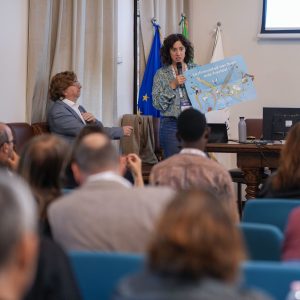
Giselle Bortolini, General Coordinator for Healthy Feeding Promotion at Brazil’s Ministry of Social Development and Assistance, presented a new national Food Systems and Climate Reference Framework, launched in Brazil to align public policies across sectors and levels of government. The framework recognizes that food systems are a major driver of greenhouse gas emissions and that climate change increasingly threatens food production, access, and healthy diets, especially for vulnerable populations. It promotes integrated mitigation and adaptation actions, climate justice, and the right to adequate food, while strengthening food and nutrition security policies. Bortolini highlighted the central role of cities as key actors of change, supported by national programmes such as Alimenta Cidades, which provides funding, technical assistance, peer learning, and tools to help cities assess and transform their food systems. The framework outlines pathways focused on governance, sustainable agriculture, biodiversity, water access, food supply as a public policy, circular cities, and the reduction of food loss and waste.
Conclusions
Overall, this parallel session aimed to expand the debate about the relationship between climate change and food systems, promoting policies that are both sustainable and equitable. Cities such as Helsinki, Minneapolis, Osasco, and Seberang Perai demonstrated how local leadership can transform food production, distribution, and consumption while promoting equitable access to nutritious food.
The session moderator, Andrea Calori, highlighted several cross-cutting priorities for advancing the food–climate agenda: the need to build a shared agenda between climate and food policies, translating global climate goals into locally grounded actions through clear narratives, education, and awareness-raising; the importance of developing a common language to engage both decision-makers and communities; the role of data and indicators to inform policies, measure impacts, and strengthen coordination across cities, with shared learning remaining a key challenge; and the urgency of moving beyond isolated pilot projects toward structural, long-term policies, particularly through territorial and urban planning. While cities are central drivers of change, national governments play a crucial enabling role by providing coherent policy frameworks, funding, and multilevel coordination to scale up effective food and climate action.
Special thanks to Sofia Cesarano, MUFPP Intern from the University of Milan, for writing this article.